
Archived from: InfoQ
Authors: Craig Larman and Matt Winn
Published: April 14, 2014

Background
J.P. Morgan’s Global Core Processing Technology organization (3000+ employees across multiple locations) underwent significant organizational transformation in 2013. The company moved from “Scrum-But” practices to genuine Large-Scale Scrum (LeSS) implementation, requiring structural changes rather than merely adopting agile terminology.
Previously, the organization maintained traditional hierarchies with “contract negotiation” replacing customer collaboration. Separate component teams, functional specialists, and R&D project managers created handoffs and delays in delivering customer-centric features.
Change within the Core Processing Securities Group
Under Mike Goldverg’s leadership, the Securities organization became the first group to implement comprehensive structural changes with these priorities:
- Clear product identification and empowered Product Owner roles
- Creation of cross-functional feature teams
- Elimination of Level-1 manager positions
- Manager transformation from command-and-control to coaching-and-mentoring
- Development of master programmers as coaches for Extreme Programming techniques
- Team self-selection of Scrum Masters
Traditional Component Teams and Related Planning
The previous model organized teams by architectural components, each with a manager-owner. Customer features spanning multiple components required extensive coordination between competing business units and component owners—a time-consuming process that often didn’t translate into actual delivery.
Identification of Larger Customer-Centric Products
The transition recognized that customer solutions involved families of components. The organization eliminated traditional component teams and created larger multi-component products reflecting end-to-end customer features. For example, a transaction processing product consolidated previously fragmented work.
Identification of Real Product Owners
Feature-centric products simplified planning by reducing coordination between management groups. The organization recruited senior, respected business-side Product Owners—a challenging shift after decades of annual requirements definition cycles.
Within Securities Operations, the organization created a dedicated Product Owner group by combining willing, experienced people from both R&D and Operations, led by a Senior Operations Executive. For larger products exceeding 10 feature teams, the model introduced “Requirement Areas” with Area Product Owners managing subsets of teams—a departure from traditional component-based divisions.
Feature Teams are Born
The transition from “Scrum-But” to genuine feature teams required substantial mindset shifts. Previously, separate analysis, component, and testing teams handed off work in waterfall-like sequences. Feature teams instead delivered complete, customer-facing functionality without handoffs.
Mike Goldverg conducted self-designing teams workshops globally, transitioning from functional and component teams to cross-functional feature teams within three hours per site. Each team combined domain, technical, and functional skills.
Challenges and adjustments included:
A specialized Information Architect initially resisted learning secondary skills and cross-training teammates, preferring to optimize his role. Within months he sought a traditional IA position elsewhere. Meanwhile, other team members with secondary data modeling skills expanded into those areas, reducing bottlenecks and key-person dependencies.
Previously, centralized teams maintained proprietary frameworks controlling datastore interactions. Teams requiring changes faced extended wait periods. The LeSS adoption introduced internal open-source approaches where core components were built primarily by specialized teams but in partnership with feature teams. Comprehensive automated pre-checkin tests enabled all teams to work on trunk confidently. Component guardians from core teams coached other developers while monitoring code quality—eliminating waste from waiting and frustration.
One dedicated tester began regular programming within two sprints, checking in simple Java changes often via pair programming. This flexibility allowed faster delivery as teams distributed testing and development responsibilities.
HR and Organizational Title Changes
The organization eliminated function-specific titles like Business Analyst and Tester, replacing them with the broader Developer designation encouraging multi-skilled development.
Elimination of Level-1 Manager Role
High-performing developers promoted to level-1 manager or team-lead roles typically lost hands-on technical work to management overhead, despite their promotion being based on technical excellence.
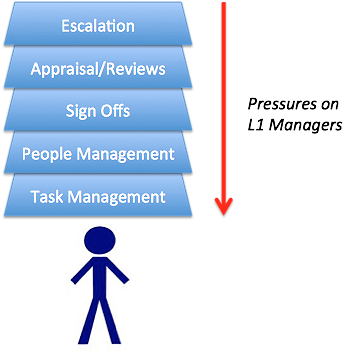
Figure 1: Traditional management overhead responsibilities
Scrum’s self-organizing teams eliminated this role. Ex-team-leads joined feature teams as regular members, returning to “analysis, coding, and testing”—work they found most satisfying.
Leadership communicated strong signals through compensation that returning to hands-on development was valued. Some Executive Directors returned to development after years in management roles, earning respect from teammates and Product Owners.
A few former managers attempting to return to teams couldn’t adopt collaborative behaviors and attempted to direct peers or override Product Owner decisions—these individuals eventually moved to other organizations.
One Vice President who thrived in the new model earned promotion to Executive Director while remaining a hands-on team member: “back to doing value work and no longer burdened by managerial responsibilities he earned the respect of teammates and the Product Owner.”
The organizational goal became creating “a culture of great well-paid hands-on long-term developers, rather than creating more manager positions.”
Emergence of Line Coaches
Remaining technology managers transitioned from command-and-control to coaching-and-mentoring as line coaches. The organization became significantly flatter, with each line coach potentially overseeing up to one hundred employees from an HR hierarchy perspective.
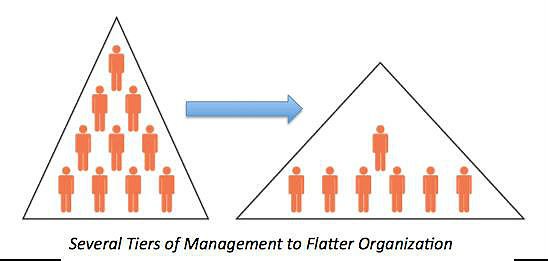
Figure 2: Flattened organizational structure with line coaches
Ideal line coach attributes, behaviors, and responsibilities:
- Replace command-and-control mentality with coaching and mentoring
- Relinquish project/feature delivery responsibility (feature teams self-manage)
- Maximize client satisfaction and product quality
- Develop personal expertise in lean thinking, technical skills, and domain knowledge
- Support continuous improvement through “Stop and Fix” behavior and improvement experiments
- Practice “Go See and Help”—direct engagement with teams rather than isolated offices
- Facilitate and influence rather than direct and force
This cultural shift proved seismic in traditional banking environments accustomed to hierarchical decision-making. The organization learned that genuine cultural transformation required structural system changes first. “Scrum-But” implementations failed because old manager structures and specialist positions remained unchanged.
Not all line coaches adjusted naturally. Some valued their previous responsibilities—funding decisions, financial planning, delivery prioritization, and stakeholder management—now belonging to business-side Product Owners. Several former managers uncomfortable with changes received support to transfer to waterfall-oriented groups maintaining command-and-control structures.
Teams Make Important Decisions
Prior to LeSS adoption, managers assigned team leads and project managers directing teams. Real Scrum required self-managing flat teams making important decisions autonomously.
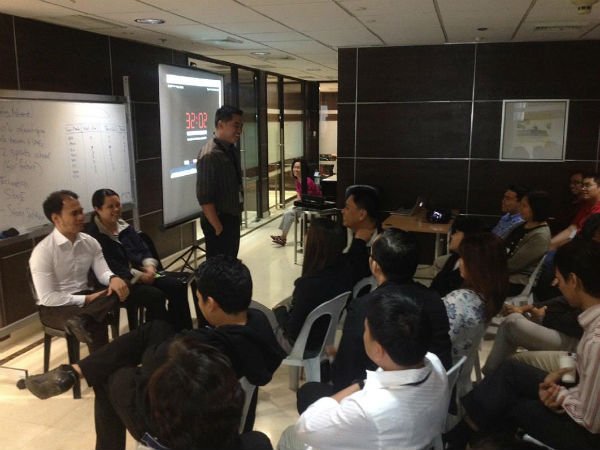
Figure 3: Feature teams in Manila select full-time Scrum Masters
At the Manila site, feature teams identified needing full-time Scrum Masters and raised this as an impediment. Rather than management assignment, teams conducted interviews and selected their own Scrum Masters. Most important organizational decisions followed similar autonomous team-based approaches.
In Conclusion
The Securities department implemented fundamental organizational changes toward closer-to-real Scrum-based operations.
Key outcomes:
- Feature teams reduced handoffs, context switching, delay, key-person risk, inflexibility, and single-specialist bottlenecks—addressing significant lean wastes
- Elimination of Level-1 manager roles returned skilled developers to direct value-adding work on customer features with enhanced skills transfer
- Small urgent demand delivery cycles improved measurably
- Larger requests gained transparency through release burnup charts
- Software integration to production each sprint eliminated nebulous merge, integration, and test phases
- Business-side Product Owners enabled responsive planning with smaller requirements focused on business value
- Line coaches learned supporting and mentoring over dictation
- Teams gained empowerment for important decisions without approval requirements
Cultural change remains ongoing after deep structural shifts. Early encouraging signs include “increased agility (flexibility, lower cost of change) and improved quality.”
A Singapore Securities team member reflected: “I’m really enjoying this, I couldn’t go back to the way we used to work. The team is happy, bought in to evolving and improving the product and able to concentrate on delivering value to the customers.”
About the Authors

Craig Larman co-created Large-Scale Scrum with Bas Vodde and serves as organizational-design consultant for enterprise LeSS adoptions. Since 2004, he has guided major organizations including J.P. Morgan, Ericsson, UBS, Xerox, and others. He co-authored multiple LeSS books on scaling lean and agile development.

Matt Winn serves as Securities Location Coach for Singapore and Manila at J.P. Morgan, mentoring over 100 staff across 14 cross-functional feature teams. With 15+ years software development experience in financial services, telecommunications, and related domains, he focuses on Securities Processing product delivery.