Number of backlogs and multi-learning 2) functional team and component team

(Originally published by Lv Yi on June 12, 2019)

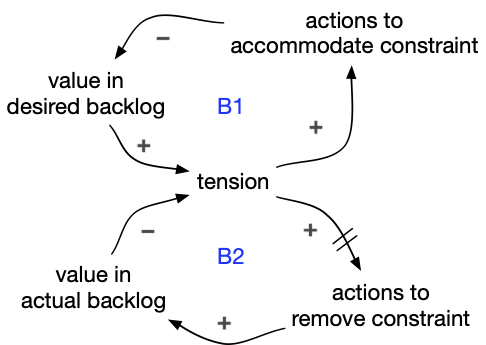
In this article, we shall look at the structure of functional and component teams, explore the dynamics around their backlogs, analyze its impact on agility, and find the lever to optimize for agility.

org structure impact on agility

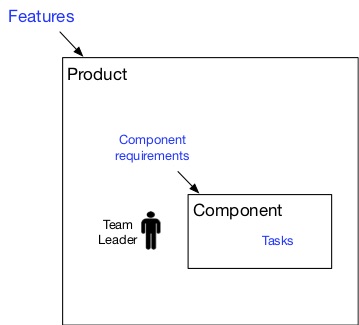
A functional team is responsible for functional work such as analysis, design, implementation, and testing. Component team is responsible for the implementation of various technical components, such as component A, B and C. Each team has its own work and priority, thus, its own backlog. For overall value delivery, it means that the required work is in multiple backlogs which are dependent on one another.

Number of backlogs - the ultimate lever

(Originally published by Lv Yi on Sep 22, 2018)

The number of backlogs is the ultimate lever for agility.

This is the insight we gained from the systems modeling exercises in my recent CLP course. I used to think of two main designs from LeSS: 1) one product backlog, and 2) feature team. I realized that these two were just different applications of the same lever, which is the number of backlogs. Please note that backlogs here include all kinds: product backlog, team backlog, individual backlog, etc. Some are explicit and others maybe be implicit.

How many backlogs do we have in an organization? Does one product have one backlog? Does one team have one backlog? Or, does one person have one backlog? When all teams in the same product share one priority, there is only one backlog for the whole product. When every member in the same team has its own priority (e.g. his priority follows his speciality), there are actually many backlogs even for one team.

When we actively look for backlogs, we will find plenty.